
 English

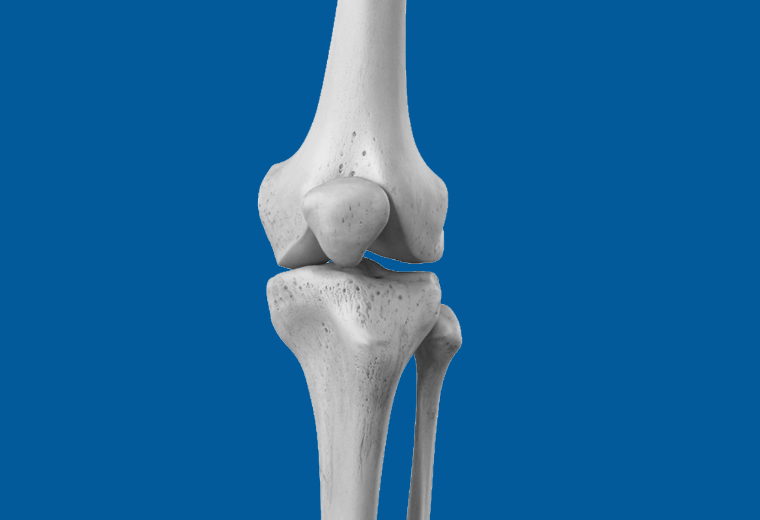
Introduction
Purpose of the operation
The operation consists of reconstructing the anterior cruciate ligament under arthroscopic control, using an autograft taken from the patient's thigh.
Indications/Contraindications
The decision to operate should be made after a complete clinical and radiological assessment in a motivated patient. It is linked to the severity of the instability in daily life. For isolated ACL ruptures, the indication depends on the patient's profession and athletic status. If there are professional obligations or if the patient is not a professional or high-level athlete, rehabilitation is initiated (mobilization, muscle strengthening, and proprioceptive exercises), and temporary immobilization is achieved with a pain-relieving splint for a few days. The indication for ligament reconstruction is discussed subsequently based on clinical symptoms, the patient's age, and their socio-professional and athletic activities. It is important to emphasize that initiating functional treatment, whether temporary or permanent, as decided by the surgeon and the patient, does not constitute abandonment of treatment.
Preparation
Orthopedic assessment: The examination performed by the orthopedic surgeon and the X-ray assessment of the knee will determine the intervention. The treatment is also tailored to the functional demands and the patient's age.
Anesthetic assessment: The consultation with the anesthesiologist aims to prevent operative risks and to optimize the patient's condition for their operation.
Surgery
Description
We harvest the tendon of the semitendinosus muscle, which is part of the hamstrings. It is thin (3 to 4 mm in diameter) and long (25 to 30 cm). This tendon inserts on the inner side of the tibia, 6 cm from the knee joint, at the pes anserinus.
Meniscal tear
A particular feature of the meniscus is its vascularization: the blood vessels coming from the capsule only supply the peripheral part of the menisci, as seen in the image below.
After harvesting, the tendon is folded into four bundles which are then securely tied together. This constitutes the transplant. Its initial strength is greater than that of the original anterior cruciate ligament.
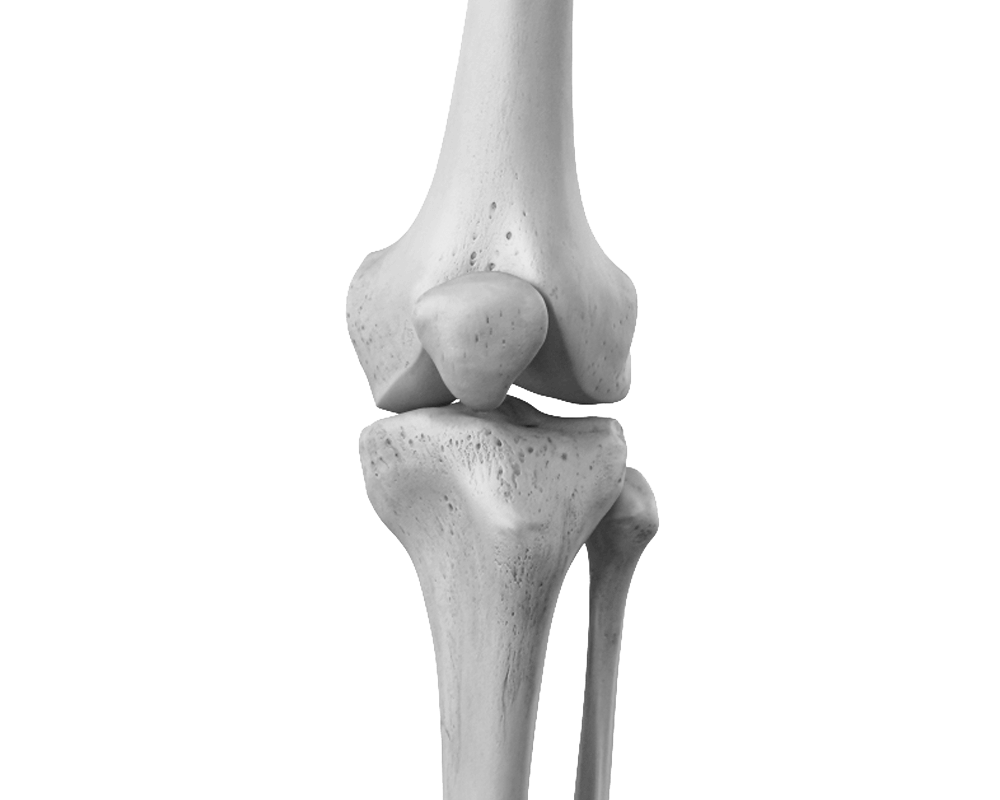
Under arthroscopic guidance, we drill a tunnel through the tibia and a second through the femur. These will be used to pass the graft and determine its position inside the knee. We prefer to leave the ACL stump intact.
The graft is fixed to the femur using two absorbable nails. On the tibia, traction sutures are laced around a screw with a metal washer, which will be left in place. This screw is usually not a problem and can be removed under local anesthesia, if necessary, after the graft has integrated.
This is a reliable technique that has been successfully practiced for many years. The crucial point is the correct positioning of the graft. It offers numerous advantages over other commonly used techniques.
Using a hamstring tendon rather than the patellar tendon reduces donor site morbidity, eliminates kneeling pain and patellofemoral pain, and decreases radiological signs of osteoarthritis. This technique also allows for better maintenance of knee extension.[1][2]
Because we only harvest the semitendinosus and leave the gracilis in place, the knee's flexion strength is minimally affected and the range of motion is preserved. This graft tends to stretch over time more than a graft composed of both semitendinosus and gracilis.[3][4][5]
Ultimately, preserving the tibial stump of the ACL significantly improves long-term functional and proprioceptive outcomes.[6]
This technique therefore results in fewer complications on knee function, and it also offers cosmetic advantages because the scars are very small.
Suites
Walking is permitted from the first day, with the protection of a brace, until active knee control is regained. Weight-bearing is limited to 30 kg for the first four weeks. Flexion-extension movements are performed as needed, depending on pain levels.
[1] A 10-Year Comparison of Anterior Cruciate Ligament Reconstructions With Hamstring Tendon and Patellar Tendon Autograft LA Pinczewski, Am J Sports Med April 2007 vol. 35 no. 4 564-574.
[2] MC Forstera, The KneeVolume 12, Issue 3, June 2005, Pages 225–230.
[3] N.Nakamura, Arthroscopy: Evaluation of active knee flexion and hamstring strength after anterior cruciate ligament reconstruction using hamstring tendons The Journal of Arthroscopic & Related SurgeryVolume 18, Issue 6, July 2002, Pages 598–602.
[4] T. Tashiro A Detailed Evaluation with Comparison of Single- and Double-Tendon Harvest. Am J Sports Med July 2003 vol. 31 no. 4 522-529
[5] J. Höher Journal of Orthopedic Research Volume 18, Issue 3, pages 456–461, May 2000.
[6] BI Lee, MD Comparison of Clinical Results According to Amount of Preserved Remnant in Arthroscopic Anterior Cruciate Ligament Reconstruction Using Quadrupled Hamstring Graft Arthroscopy, The Journal of Arthroscopic & Related SurgeryVolume 24, Issue 5, May 2008, Pages 560–568
Frequently Asked Questions
What can we expect from this operation?
This technique provides the desired stability and a functional knee. The advantage of harvesting the gracilis tendon rather than the patellar tendon is that it reduces postoperative pain, allows for faster recovery of the quadriceps muscle, and decreases donor site morbidity. However, studies show an increased incidence of radiological signs of osteoarthritis at 7 years regardless of the surgical technique.
Long-term results
Studies show functional scores maintained beyond 7 to 11 years.
Takeshi Muneta, Arthroscopy: The Journal of Arthroscopic & Related Surgery, Volume 22, Issue 3, Pages 252-258
RW Poolman, Acta Orthopedica 2007; 78 (3): 350–354
David W. Starch,THE AMERICAN JOURNAL OF SPORTS MEDICINE, Vol. 31, No. 3 © 2003 American Orthopedic Society for Sports Medicine
What kind of scar will I have?
Three incisions are required for the arthroscopy, a 3cm incision for harvesting the graft and placing it inside the knee.
What sports will I be able to do after my procedure?
Returning to sports is a gradual process: it begins with resuming cycling, cross-country skiing, and Nordic walking after six weeks. Two and a half months after surgery, a specific training program can be offered, depending on the sport. Returning to competition typically takes place between the third and sixth postoperative months, depending on the sport and the patient's physical condition.
How long will I need to wear a splint?
A joint brace will be provided upon your discharge from the clinic to help you regain control of your knee. This brace is worn for the first four weeks, then intermittently, and subsequently only during certain sporting activities.
How long will I need to use crutches?
The use of crutches is necessary until full knee extension and a symmetrical, limp-free gait are restored. The gait should be smooth and harmonious when the crutches are no longer used, and under no circumstances should the patient switch to using only one crutch.
How long does the healing process take to integrate the new ligament?
The integration of the tendon graft into the bone tunnels takes approximately four weeks. At this point, the point of weakness is no longer at the tendon-bone junction but within the graft itself. Rehabilitation takes these biological parameters of healing and recovery into account, and it is important to follow the recommended steps.
When will I be able to take a shower?
The dressings applied are waterproof plastic dressings that allow you to take a shower as soon as you return home.
When will I be able to drive?
If it's your left knee, you can drive an automatic car immediately and a manual car after three weeks. If it's your right knee, you should wait a month until you're able to brake suddenly and confidently if necessary.
Contact one of our specialists
on the subject
{loadmodule mod_minitekwall,Display knee doctors disease sheet}

 Français
  English (UK)