- Welcome
- Hip osteoarthritis
Hip osteoarthritis
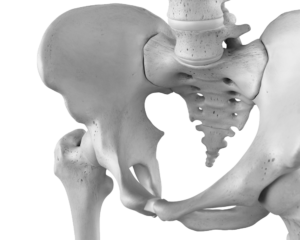
Hip
What is osteoarthritis?
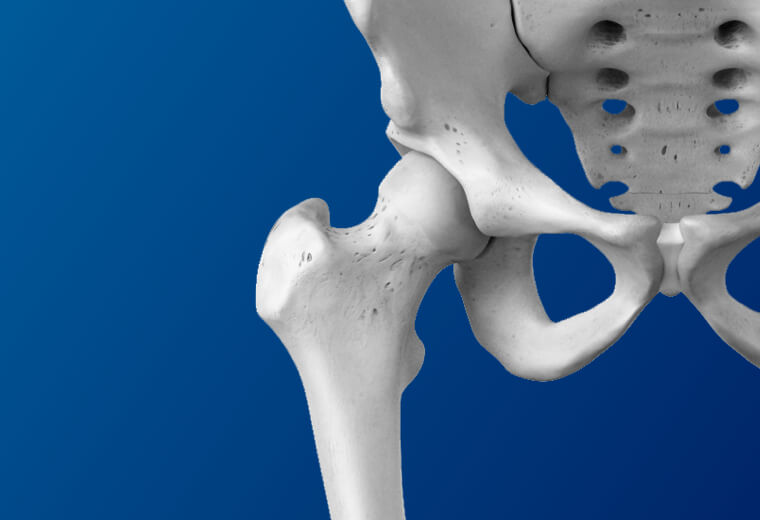
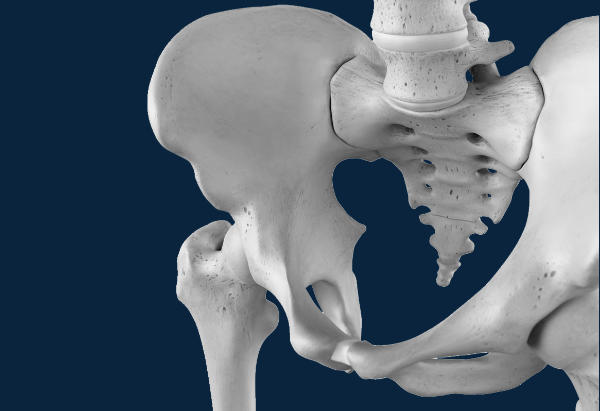
This is the progressive wear and tear of the cartilage until the bone surfaces are exposed. This results in rough friction between bones, accompanied by pain and inflammation of the hip. The joint gradually stiffens, and the pain progressively reduces walking distance. In advanced stages, this condition leads to an increased risk of falls and limits the patient's independence.
The natural progression of untreated osteoarthritis leads to permanent hip deformity, which alters the posture of the entire body. This process is irreversible.
What are the consequences?
The hip is stiff and offers less and less respite between painful flare-ups. Limping is common. The stiffness becomes debilitating in certain daily activities, such as putting on shoes.
The pain is usually located in the groin and buttock, but sometimes extends down to the knee and can mimic knee pain. Posture and gait are altered. Other joints, such as the knee and lower back, are affected by the lack of hip mobility and also suffer.
What tests need to be done?
A clinical examination by an orthopedic surgeon and radiological assessment are sufficient in most cases. Further examinations, such as a CT scan or MRI, may be useful to confirm the diagnosis or plan surgery.
Medical treatments
To treat pain, analgesic drugs, anti-inflammatories, infiltrations (injections into the joint) and physiotherapy can provide more or less lasting relief.
In cases of advanced osteoarthritis, the benefit of these measures is often temporary.
Surgical treatment
Depending on the severity of the pain and disability caused by osteoarthritis, the surgeon may recommend hip replacement surgery. The decision to proceed with this surgical procedure is made jointly by the patient and the surgeon.
Your surgeon will choose the prosthesis that best suits your anatomy and lifestyle.
Hip prosthesis
What is a hip prosthesis?
The principle of a hip replacement is to replace the diseased joint with metallic implants. One is placed in the femur (the stem) and the other in the pelvis (the acetabulum). The connection between these two implants (bearing couple) is ensured by a metal or ceramic ball and a polyethylene or ceramic insert.
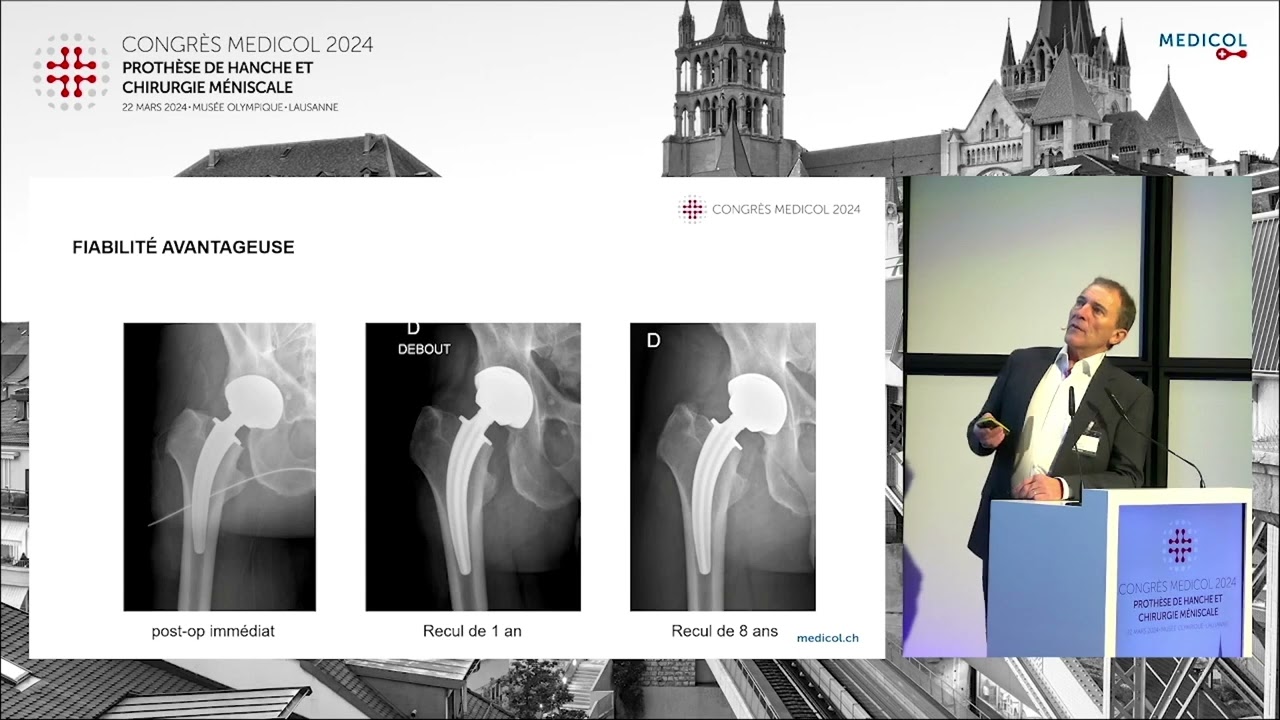
Thanks to improvements in materials and the evolution of surgical techniques, currently implanted hip prostheses have a lifespan of several decades.
Anesthesia
You will have an appointment with one of the clinic's anesthesiologists before your operation. You will be able to discuss and decide with them the type of anesthesia that will be offered to you on the day of your surgery. Your referring physician will have previously informed them about your health. If necessary, the assessment will be supplemented by other tests (blood tests, electrocardiogram).
The operation itself
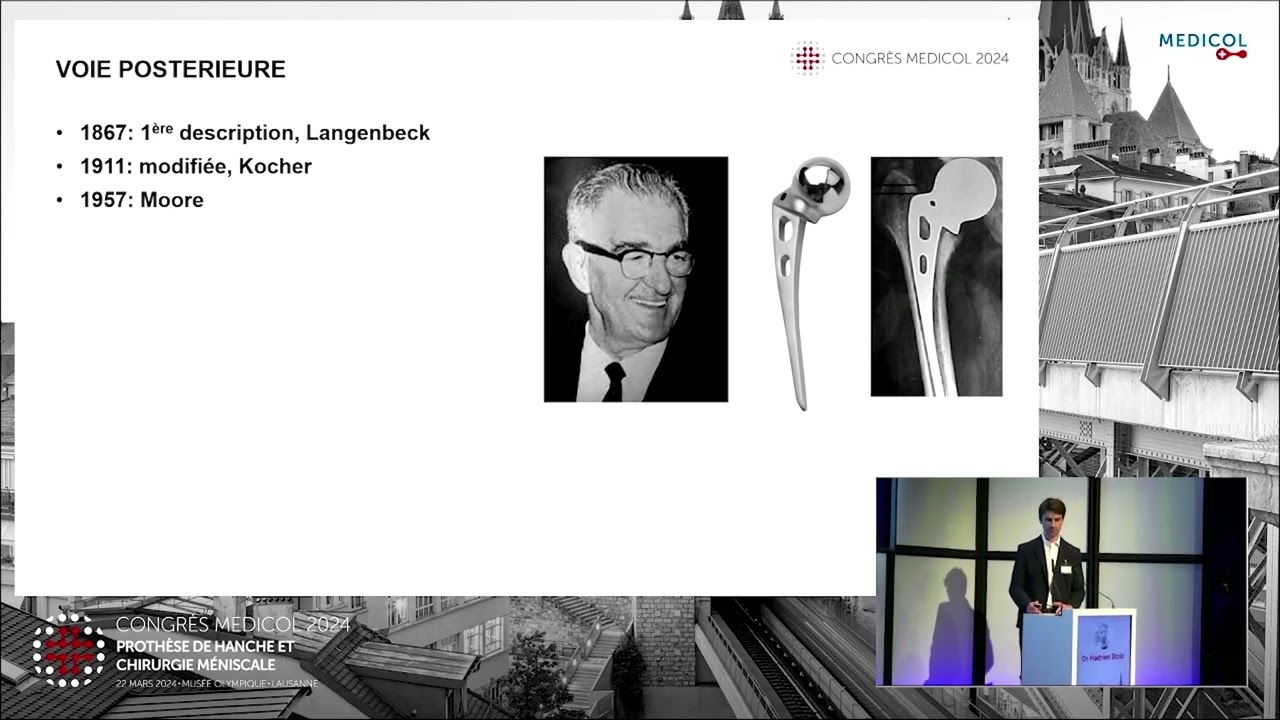
The incision is approximately twelve centimeters long and is located at the front of the thigh (anterior approach) or on the side towards the buttock (posterior approach). Once the joint is exposed, the surgeon cuts the femoral neck with a saw. This bone cut is made at a precise height according to a pre-planned procedure. Once the femoral head is removed, the acetabulum of the pelvis is accessed. The damaged cartilage in this cavity is then removed using hemispherical burrs to prepare for the implantation of the acetabular cup in the acetabulum.
The surgeon then prepares the femoral cavity with rasps of varying sizes until satisfactory stability is achieved. After checking the joint's mobility and stability with temporary implants, the permanent implants are inserted and the joint is reduced. The joint is then thoroughly irrigated, and all structures are closed.
A drain (small tube) may be inserted to drain the surgical area. Finally, for the scar, a suture (absorbable or non-absorbable) or staples may be used, depending on the surgeon's preference.
Pains
Pain associated with osteoarthritis usually disappears relatively quickly after surgery. It's possible to experience some lingering pain in specific areas, especially if the hip was very stiff and damaged before the operation. This pain is generally related to the muscles and tendons surrounding the joint and will eventually subside.
Expected results
The main benefits one can expect after this operation are pain relief and the ability to walk freely again. It still takes a few months to regain full mobility and feel comfortable walking in all situations. However, it is possible to walk flat-footed the very next day, putting weight on the hip, and one can generally stop using crutches after a few weeks.
We recommend a recovery period of 2 to 3 months. While things can progress more quickly, a surgically repaired hip needs to be protected. Adapt your leisure activities, avoid strenuous sports and heavy lifting to enjoy them for as long as possible. The return to work varies depending on age and occupation.
Ideally, you should eventually forget that you had hip surgery.
The follow-up
You must strictly follow your surgeon's instructions. Attend all scheduled appointments and undergo follow-up examinations (X-rays). This is important. It allows us to monitor the progress of your hip, adjust the treatment, and ensure the prosthesis is properly secured in the bone.
Risks and complications
Infections
The most feared risk in prosthetic surgery is prosthesis infection. Procedures are in place to minimize this risk as much as possible during the pre-, intra-, and post-operative periods.
To reduce the risk of infection, it is absolutely essential to check before the operation that there is no latent infection (dental, skin, urinary, for example).
Venous thromboses
Prevention of the risk of thrombosis or pulmonary embolism is systematic after any lower limb prosthesis operation.
Depending on your health status and risk factors, the surgeon will adapt the treatment for optimal prevention.
The appearance of any symptoms is monitored by healthcare staff and during various follow-up consultations.
Hematomas
Bruising is common, but a hematoma can sometimes appear on the thigh and cause pain. In most cases, the blood is gradually reabsorbed, and this situation does not require any special treatment other than applying ice.
Vascular or nerve damage
The risks of vascular or nerve damage, although rare, are inherent to any hip surgery. A decrease in sensation around the scar may sometimes occur and usually disappears within a few weeks.
Post-operative anemia
Significant blood loss can occur and sometimes needs to be replaced. Today, a blood recovery system (Cell Saver) is available in the operating room. Therefore, the need for a blood transfusion other than your own blood is rare.
Dislocation
Leg length
Fracture
Wear and loosening
Medicol Specifics
2D and 3D Planning
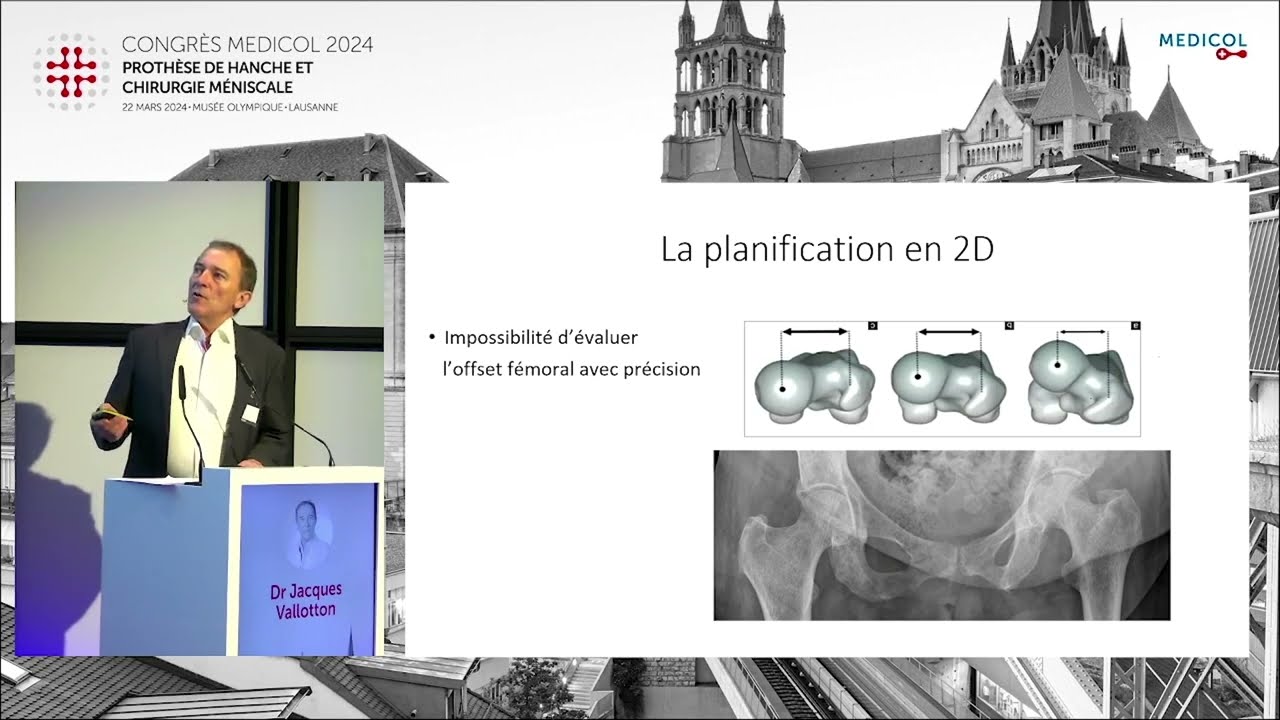
Before the procedure, your surgeon will order X-rays and a CT scan to plan your prosthesis using specialized software. The planning is done in both 2D and 3D, allowing for precise planning to better anticipate potential surgical difficulties and choose the appropriate implant size. The goal is to position the prosthesis as closely as possible to the original anatomy of the hip for each patient.
Custom-made prosthesis
In most cases, there is no need to produce a custom-made prosthesis. Thanks to 3D planning, a standard prosthesis will adapt perfectly to the patient's anatomy, and a wide variety of options are available.
However, in rare cases, planning a standard prosthesis is impossible, particularly in cases of malformation or unusual anatomy, or after a previous fracture that has altered the shape of the bone. In such cases, a custom-made prosthesis perfectly adapted to the patient's femur is recommended. This procedure, reserved for a minority of patients, is relatively expensive.
Robotic surgery and artificial intelligence
Robotic surgery and artificial intelligence are gradually being integrated into operating rooms. Currently, robots in orthopedics aim to improve the precision of movements so that the surgical procedure corresponds as closely as possible to the planned outcome. These technologies are progressing rapidly, and it is undeniable that in the future, they will be an integral part of surgery, which is not yet the case today.
Our surgeons are currently training in the use of robots in orthopedics.
Back to sport
We place great importance on returning to an active life, and in particular returning to sport, after the fitting of a prosthesis.
During the rehabilitation phase, it's important to adapt activities to your own pace of progress. Every individual is different, and it's pointless to over-prescribe the resumption of activities. Initially, the main goal is to regain a smooth, balanced gait without limping.
Once you have regained a normal gait with a straight upper body and good arm swing, you will be comfortable going down stairs without holding on. Then you will be able to resume your sports or leisure activities.
You should start with what you enjoy and are good at. Gentle activities can be resumed quickly, and as you gain confidence, it's possible to consider other activities, especially if you practiced them before the operation.
High-impact sports or those requiring a wide range of motion should be avoided in the first few months. Eventually, once the prosthesis is well integrated into the bone, there should be no restrictions if the hip is properly controlled by the muscles (proprioceptive recovery).
Speak to your surgeon to get their advice.
Care and follow-up
After the consultation with the surgeon, you will have a pre-hospitalization consultation with a resident physician to discuss the information received, check that everything is properly organized, that the pre-operative health assessment is complete with the list of medications, etc.
You will still be able to ask all your questions during this interview.
To document our results, we use questionnaires and referenced scores that are recorded in your file. The purpose of collecting this data is to assess the quality of care and your satisfaction level.
The prosthesis is also registered in the SIRIS register (federal register of implants).
Frequently Asked Questions
How long does the operation take?
What is the lifespan of prostheses?
What is the prosthesis made of?
What is the length of the incision required for hip replacement surgery?
When can I start driving?
How long should I keep the rods?
Will I set off the alarms when going through airports?
Do I need to take antibiotics when I go to the dentist?
When will I be able to start playing sports again?
How long does a prosthesis last?
Which movements are prohibited?
Can I have a normal sex life?
Summary
Need medical advice?
The doctors at the Ouchy Orthopedic Center are at your service.
1006 Lausanne
+41 21 510 33 48
Learn more in videos
Medicol Videos
17:44
18:06
25:37
11:49
9:55
27:14
33:42
16:49

21:01

21:33
1:09:38
30:55
Contact one of our specialists on the subject
Ouchy Orthopedic Center
Specialized medical consultations in orthopedics and traumatology in the heart of Lausanne