
 English

Introduction
Purpose of the operation
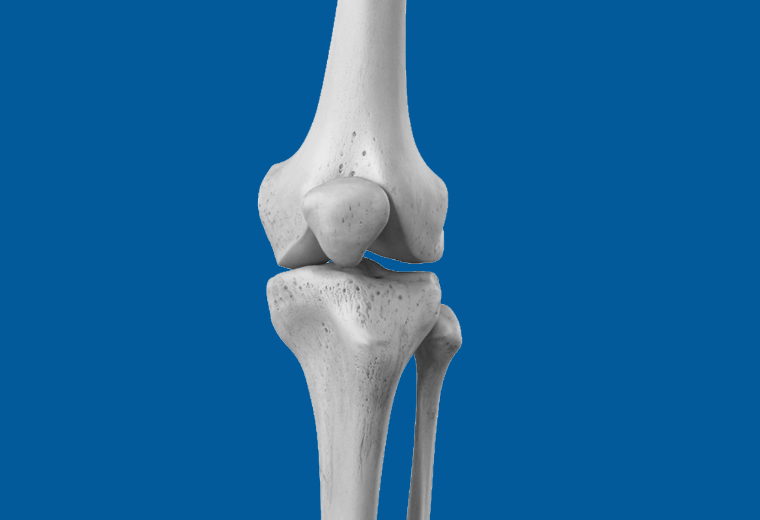
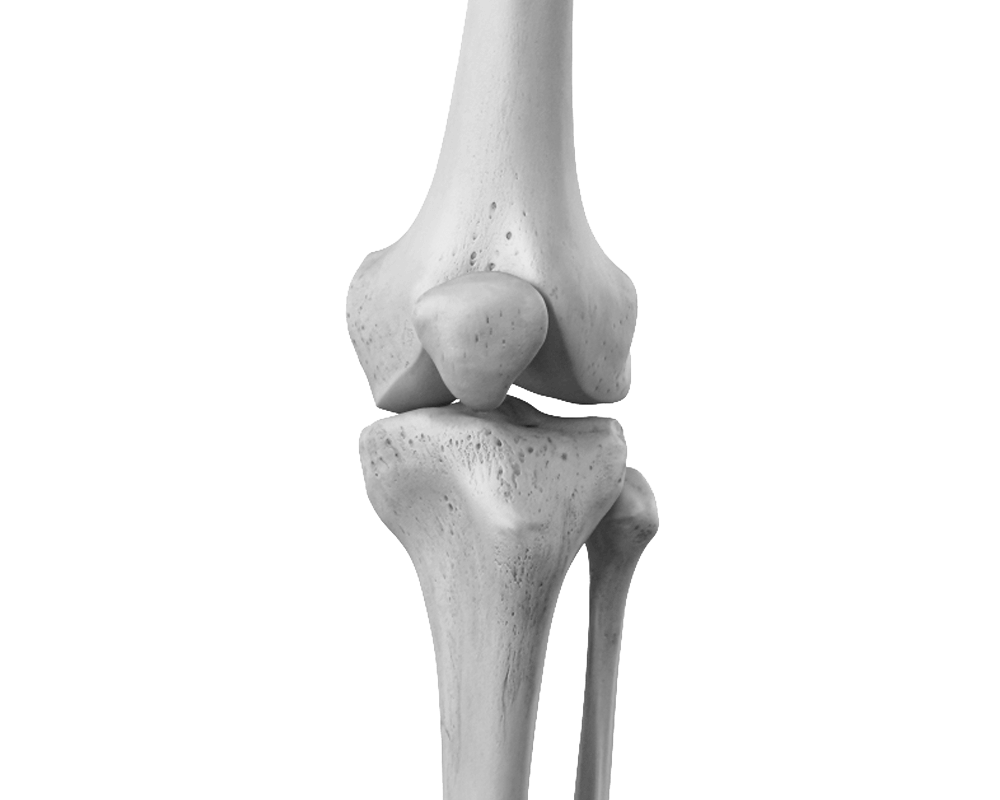
This procedure involves replacing the worn cartilage with an artificial interface. Its aim is to restore mobility to the affected knee, eliminate pain associated with osteoarthritis, and achieve a walking gait without a limp.
Indications
Debilitating pain affecting daily life. Failure of conservative measures.
Contraindications
Patients too frail to withstand surgery. Patients suffering from an active infection.
Preparation
Orthopedic assessment: The examination performed by the orthopedic surgeon and the X-ray assessment of the knee will determine the type of prosthesis to be implanted. The treatment is also tailored to the functional requirements and the patient's age.
Anesthetic assessment: The consultation with the anesthesiologist aims to prevent operative risks and to optimize the patient's condition for their operation.
Surgery
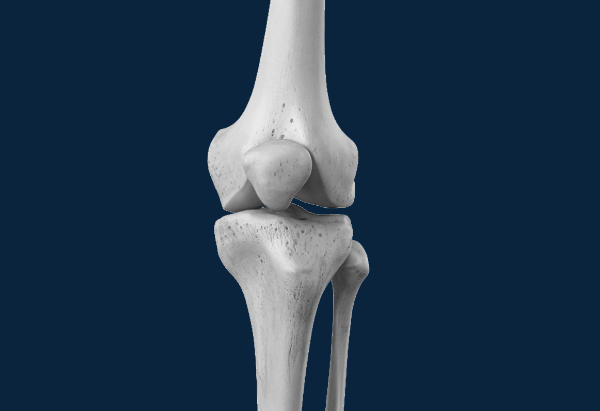
1. Femur, 2. Prosthetic femoral shield, 3. Polyethylene interface, 4. Tibial baseplate, 5. Tibia.
Description
An incision is made on the front of the knee to expose the knee joint. The damaged joint surfaces are removed, and the bones are shaped to accommodate the joint prosthesis, as shown in this video. This shaping must be precise to the millimeter, following cutting guides. The position of these guides is calculated using a three-dimensional model of the knee derived from an MRI or CT scan.
Several types of implants exist: fixed or mobile bearing, cam-operated or camless, constrained or unconstrained, replacing the patella or not, cemented or uncemented. The indication for a particular implant is discussed based on various criteria: the degree of osteoarthritis, associated ligament injuries, concomitant joint injuries of the lower limb, age, weight, general health, etc. In most cases, we opt for unconstrained, uncemented prostheses that favor avoiding prosthetic replacement of the patella through an adapted femoral shape and the presence of a mobile bearing.
Suites
Post-operative care is designed with a focus on rapid and safe rehabilitation. We recommend early, progressive mobilization and a return to walking the day after surgery. The exercises taught by our physiotherapists aim to quickly restore the patient's ability to walk independently and maintain good balance, and to prevent complications such as reduced range of motion.
The use of canes is reserved for the recovery of a harmonious and limp-free gait, which generally takes between four and six weeks.
The scar will be checked on the second postoperative day, on the fifteenth day, the threads or staples will be removed when the skin suture is not absorbable.
Frequently Asked Questions
What can we expect from this operation?
This is a common and reliable operation that usually gives good functional results, stable over time and significantly improving quality of life.
Long-term results
Today, the lifespan of implants far exceeds 15 years and the revision rate has greatly decreased with the advent of new implants.
J.-N. Argenson Orthopedics & Traumatology: Surgery & Research Volume 99, n° 4 pages 385-390 (June 2013) Jun Ito The Journal of Arthroplasty Volume 18, Issue 8, Pages 984–992, December 2003
Lam, G. Abstracts of the 33rd Annual Congress of the Hong Kong Orthopedic Association (HKOA), 2013, p. 76, abstract no. 9.4 J. Newman J Bone Joint Surg Br. 2009 Jan;91(1):52-7.
How long does the operation take?
Approximately 1 hour 30 minutes to 2 hours
What is the prosthesis made of?
Different materials can be used depending on the type of implant. The contact surfaces are generally made of chromium/cobalt/molybdenum for metallic implants or oxynium. The intermediate component is polyethylene. In uncemented implants, the contact surface between the metallic implant and the bone is made of porous titanium, usually coated with hydroxyapatite, a substance used for its osteoinductive effect.
Will I set off the alarms when going through airports?
Yes, generally, as it is a fairly large metallic implant, it is detectable at the airport gate and we will give you an implant carrier card for this purpose.
Do I need to take antibiotics when I go to the dentist?
Antibiotic prophylaxis may sometimes be recommended during extensive dental cleanings or in cases of dental abscesses. For other treatments, the need for antibiotic prophylaxis should be assessed on a case-by-case basis.
When will I be able to start playing sports again?
Resuming sports activities should be gradual. Activities such as Nordic walking, cross-country skiing, or brisk walking can be resumed from the 6th week; skiing, tennis, or golf can be resumed after three months. Activities like running are not recommended.
When can I start driving?
Driving is permitted in an automatic car from the 10th day after surgery if the left knee was operated on. For a manual car, a waiting period of 3 weeks is required for the left knee. For the right knee, it is at the end of the 6th week. However, driving is only permitted once there is excellent control of the lower limb, allowing the driver to brake suddenly if necessary without hesitation.
How long should I keep the rods?
It is important to regain a smooth, limp-free gait with a symmetrical step and good lumbar-pelvic alignment. To achieve this, you should continue using crutches until you are able to walk normally, which typically takes 4 to 7 weeks.
How long does a prosthesis last?
Currently, if we refer to orthopedic medical literature, the duration of implants far exceeds 20 or even 30 years (implant survival rate of more than 95% at 15 years).
When will I be able to take a shower?
Generally from the 3rd postoperative day.
Contact one of our specialists
on the subject
{loadmodule mod_minitekwall,Display knee doctors disease sheet}

 Français
  English (UK)